
Financial Insights & Expert Advice
Explore articles, tips, and strategies to help you make confident money decisions at every stage of life.

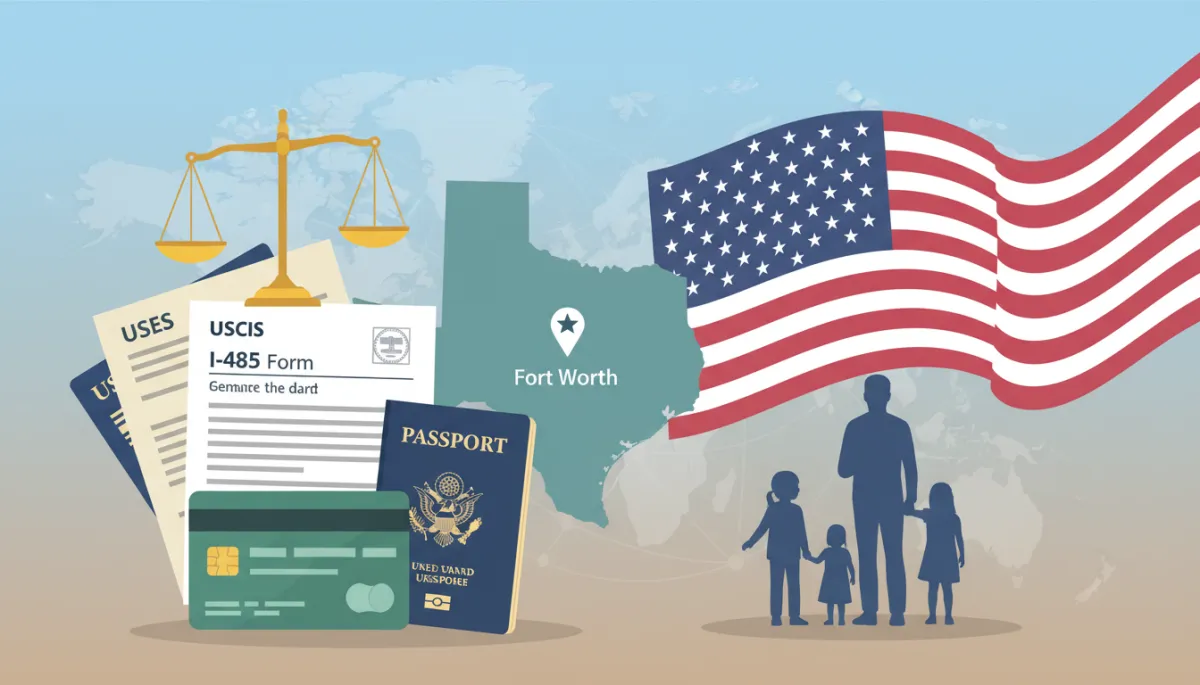
Adjustment of Status: Green Card in Fort Worth
Immigration Services, Adjustment of Status, Fort Worth DFW
Adjustment of Status: Getting a Green Card Without Leaving the United States
By Bison Vazquez, IKAR Tax and Investments Inc – serving immigrant families across Fort Worth and the greater DFW area.
For many immigrant families in Fort Worth and throughout DFW, the idea of leaving the United States for a consular interview can be frightening. You may worry about being separated from your spouse or children, losing your job, or facing long delays abroad. Adjustment of Status (AOS), filed on Form I‑485, is the process that allows certain immigrants already in the U.S. to apply for a green card without leaving the country. When available, it can be a safer and more convenient path to becoming a permanent resident Texas without interrupting your life in North Texas.

Under current USCIS guidance, adjustment of status is considered a form of extraordinary discretionary relief, not a guaranteed right. That means your application must be prepared carefully, with strong evidence and a clear story about your life in Texas. A knowledgeable guide in Fort Worth can make a real difference in how confidently you move through this process.
Who Can Qualify for Adjustment of Status in Fort Worth and DFW?
Not everyone in the U.S. can file Form I‑485. Eligibility depends on your immigrant category and your immigration history. In the Fort Worth and DFW area, we most often see the following groups using the adjustment of status process:
- Immediate relatives of U.S. citizens – spouses, unmarried children under 21, and parents of adult U.S. citizens. These cases are common among mixed‑status families living in neighborhoods from South Fort Worth to Arlington and Grand Prairie.
- Certain employment-based applicants – professionals working in DFW’s hospitals, logistics centers, energy companies, and tech employers may qualify if they have an approved immigrant petition and a current priority date.
- Diversity Visa (DV) lottery winners – if you are selected in the DV lottery and are already living in Texas in valid status, you may be able to adjust here instead of returning to your home country for consular processing.
- Refugees and asylees – individuals granted refugee or asylum status who have lived in the U.S. for at least one year can often apply for a green card through adjustment of status, including many families resettled in the Dallas–Fort Worth metroplex.
- Special immigrant categories – such as certain religious workers serving congregations in Fort Worth, juveniles with court orders, some Afghan or Iraqi nationals, and other special programs created by Congress.
Each category has its own rules, and recent policy changes have made USCIS officers more cautious. Working with an experienced professional or immigration attorney Fort Worth TX can help you confirm whether the adjustment of status Fort Worth route is truly open for your situation.

Key Eligibility Requirements for Form I‑485 in DFW
Beyond fitting into the right immigrant category, you must also meet several legal requirements before filing your green card application Texas through adjustment of status:
- Lawful entry (inspected and admitted or paroled) – In most cases, you must have entered the U.S. with a visa or been formally paroled at the border. Many DFW families can show this with an I‑94 record, entry stamp, or other proof. Some special programs, such as certain VAWA or 245(i) cases, have exceptions, but these are complex and should be reviewed carefully.
- No bars to adjustment – Certain immigration violations, criminal issues, or past misrepresentations can block you from adjusting status. Under the newer discretionary policy, even smaller issues—like unauthorized work or overstays—may carry more weight, so it is critical to disclose them and, where possible, seek waivers or present strong positive factors about your life in Texas.
- Priority date is current – For family and employment preference categories, the Department of State Visa Bulletin must show that your priority date is “current” for your category and country. Filing without a current date is one of the most common—and costly—mistakes we see in Form I‑485 DFW cases.
- Maintaining status (for most categories) – Many applicants must show they have remained in valid immigration status up to the time of filing, with limited exceptions for immediate relatives of U.S. citizens and a few other groups. Even where the law allows some forgiveness, USCIS may still weigh long periods of unlawful presence as a negative factor in its discretionary decision.
Step‑by‑Step: How the Adjustment of Status Process Works in Fort Worth
While every case is unique, most green card applications through adjustment of status in the Dallas–Fort Worth USCIS district follow a similar path:
- Gather documents – This includes passports, I‑94 records, birth and marriage certificates, proof of lawful entry, financial documents for the Affidavit of Support, medical exam (Form I‑693), and evidence that your relationship or job offer is real. At IKAR Tax and Investments, we often help families align immigration documents with tax records to present a consistent picture of income and household size.
- File Form I‑485 with supporting petitions – Many family‑based applicants in Fort Worth file the I‑130 petition and I‑485 together. Employment‑based applicants may file once their I‑140 is approved and the priority date is current. It is critical to use the correct, current edition of Form I‑485; USCIS is now strict about rejecting outdated forms, especially after the 09/18/26 edition change.
- Biometrics appointment – After filing, you will receive a notice for fingerprints and photos at a local Application Support Center, often in the DFW area. Missing this appointment can seriously delay or even lead to denial of your case, so it is vital to attend or properly reschedule if needed.
- EAD/Advance Parole combo card – Many applicants receive a work and travel card while the I‑485 is pending. This can allow you to work lawfully in Texas and, in some cases, travel abroad. However, travel while your case is pending can be risky, particularly for those with past immigration issues, so always seek guidance before using Advance Parole.
- USCIS interview at the local field office – Most family and many employment cases require an in‑person USCIS interview Fort Worth or at another nearby DFW field office. Officers will review your forms, ask about your relationship or job, and verify your eligibility and admissibility. Being well prepared, honest, and organized makes this step much less stressful.
- Decision – After the interview, USCIS may approve your case, issue a Request for Evidence, or, in some cases, deny. Under recent policies, officers expect applicants to prove eligibility clearly from the beginning, so a strong initial filing can reduce the chance of delays or negative outcomes.
Realistic Timelines for Adjustment of Status in the Dallas–Fort Worth Area
Processing times change throughout the year, but recent data for the Dallas field office shows that about half of family‑based I‑485 cases are completed in roughly 12 months, while most are finished within about 26 months. Employment‑based adjustment cases in Texas can take closer to two years or more, depending on backlogs and security checks. These numbers are general estimates, not guarantees, but they help families plan for work, school, and travel while their cases are pending.
Because USCIS updates its processing time tools monthly, it is wise to check current estimates and compare them with your receipt date. If your case goes significantly beyond the posted timeframe, you may be able to submit an inquiry or seek help in understanding the delay. A trusted local professional can help you interpret these timelines in the context of your specific category and background.
Common Mistakes Fort Worth Families Make with Adjustment of Status
- Filing without a current priority date – Submitting a family or employment‑based I‑485 when your priority date is not current can lead to rejection or denial. Always check the Visa Bulletin carefully before sending your packet.
- Missing or inconsistent documents – Incomplete birth certificates, untranslated records, or tax returns that do not match the Affidavit of Support can raise red flags. Because IKAR also provides tax services, we often help clients align their immigration and tax records so their story is consistent and credible.
- Traveling with a pending I‑485 without proper advice – Leaving the U.S. without Advance Parole or with a complicated immigration history can cause your case to be considered abandoned or create re‑entry problems. Even with a combo card, it is important to understand the risks before you travel.
- Missing biometrics or interview appointments – Life in DFW is busy, but ignoring USCIS notices can be extremely costly. If you cannot attend an appointment, you must follow the instructions to reschedule; otherwise, your green card application Texas may be denied for abandonment.
Adjustment of Status vs. Consular Processing: Why Staying in the U.S. Matters
Many Fort Worth and DFW families face a difficult choice: apply for a green card through consular processing in their home country, or pursue green card without leaving US through adjustment of status. While USCIS now emphasizes that AOS is a discretionary benefit, when it is available, it offers important advantages:
- You can usually remain with your family in Texas instead of spending months abroad waiting for interviews or security checks.
- You may receive work authorization and, in some cases, travel permission while your case is pending, helping you maintain income and stability in DFW.
- You attend your USCIS interview Fort Worth or at a nearby field office, where you are already familiar with the community and can more easily bring documents or witnesses if needed.
On the other hand, some applicants may be told that consular processing is the only available option, especially if they entered without inspection or have certain bars to adjustment. In those situations, it is crucial to understand the risks of leaving the U.S., including possible multi‑year bars on returning, before making any decision. A careful legal and tax review can help you weigh the long‑term impact on your family’s future as permanent resident Texas households.
Support for Your Family’s Adjustment of Status Journey in Fort Worth
Navigating today’s adjustment of status rules requires more than filling out forms. It means understanding how your immigration history, family situation, and financial records fit together under evolving USCIS policies. At IKAR Tax and Investments Inc in Fort Worth, we focus on helping immigrant families approach the process with clarity and confidence—whether you are just starting your first consultation or preparing for a final interview in the DFW field office.
If you are considering adjustment of status for yourself or a loved one, you are welcome to visit us at 4200 South Fwy., Suite 2520, Fort Worth, TX 76115, explore our services online at ikartaxandinvestments.com, or review our Google Business Profile to see how we serve families across Fort Worth and the greater DFW area. You can also call us directly at (817) 305-3433 to discuss your situation and learn what steps may be available to help you pursue a green card without leaving the United States.


Why Ikar Tax And Investments?
Frequently Asked Questions
Understand your options. Navigate your future with clarity.
What types of clients do you work with?
We work with individuals, families, and small business owners who want to take control of their finances and plan for the future. Whether you’re just starting out, preparing for retirement, or managing complex investments, our advisors can help.
How do I get started?
Simply schedule a free consultation through our contact page or give us a call. We’ll discuss your goals, review your current situation, and outline a personalized strategy to help you move forward.

Get Started
Ready to Simplify Your Taxes or Immigration Process?
Let’s create a personalized plan to handle your paperwork, forms, and filings.

COMPANY
LEGAL
SOCIALS
Copyright 2026. IKAR TAX AND INVESTMENTS INC. All Rights Reserved.